


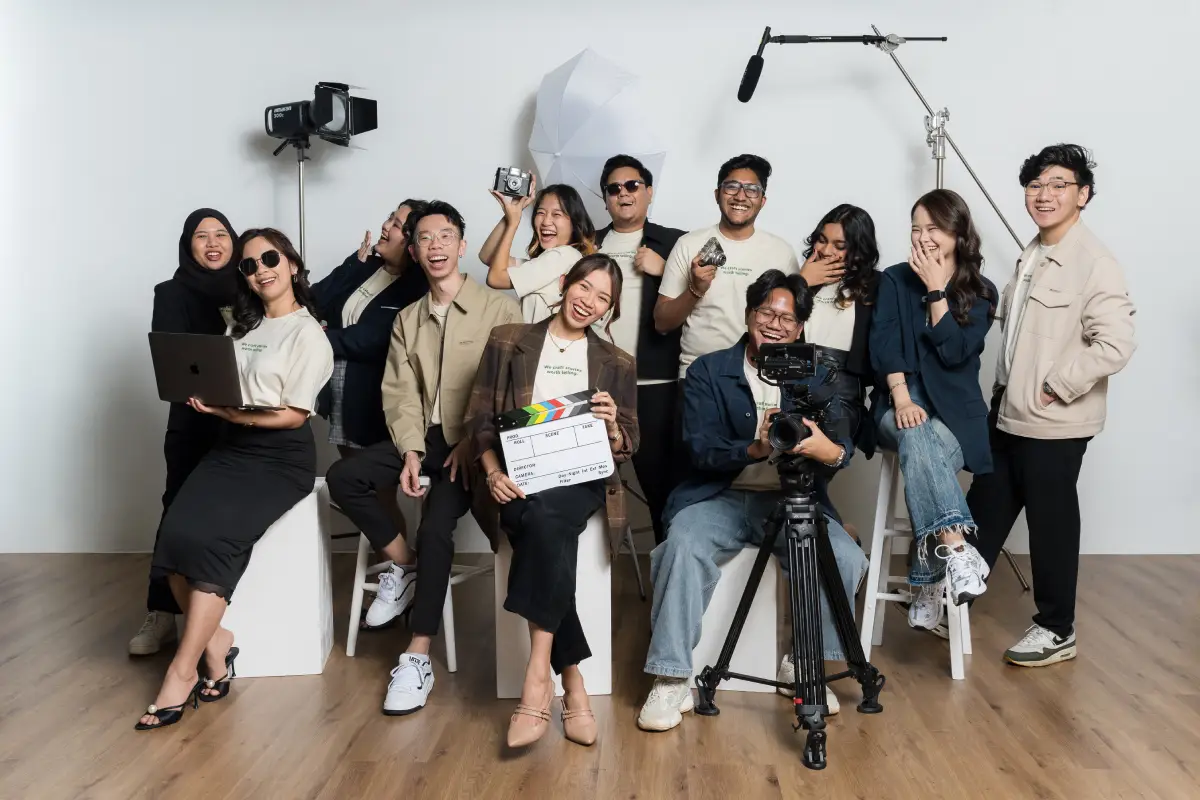
The OSL team and I have been in back-to-back 2026 social media strategy and planning calls over the past few months, and the same 3 questions kept coming up.
Different brands. Different industries. Same questions:
Instead of another generic "2026 trends" list, this post breaks down 3 platform shifts observed across 2025 campaigns based on execution data, not predictions.
1. AI Content Lowers Production Cost but Does Not Improve Content Performance
AI tools reduced content production costs in 2025. They also standardised tone, pacing, and structure across most short-form videos, making content across platforms sound and look the same.
Platforms responded by shifting to interest-first distribution signals:
- Watch-through rate
- Replay behaviour
- Save and share frequency
Posting frequency no longer determines reach. Intentional content design does.
What Concept-Led Content Delivered vs Volume Posting
When we tested a concept-driven social series for OATSIDE Brew & Bread, the performance difference was immediate.
Instead of increasing posting volume, the series was designed to optimise 4 measurable engagement outcomes:
The series consistently outperformed standard posting schedules across every engagement signal measured.
Audiences stayed longer, returned more often, and interacted more deeply than any previous content on the account.
2026 implication: AI speeds up execution. A distinctive content strategy determines whether that output reaches audiences or becomes noise.
2. TikTok Organic Reach Now Requires Paid Distribution to Scale
TikTok organic reach declined across most industries in 2025. The cause was not reduced posting frequency. TikTok evolved into a pay-to-scale platform, and organic content alone no longer sustains consistent growth.
Consistent performance now requires 3 coordinated layers:
Brands that maintained growth in 2025 applied all 3 layers. Brands that relied on organic content alone saw reach decline regardless of posting consistency. This is how [TikTok marketing execution] works in 2026.
How a Malaysian FMCG Brand Maintained Growth Despite Industry-Wide Reach Decline
For a Malaysian FMCG food brand, we applied this 3-layer structure throughout 2025. Despite industry-wide reach decline, the account maintained:
What changed was not effort. It was how organic content and paid distribution worked together.
2026 implication: Organic-only strategies cap growth. Balanced organic and paid execution sustains visibility.
3. XHS Is Expanding Beyond Lifestyle and Early Movers Have a Distribution Advantage
Xiao Hong Shu grew significantly in late 2025. On our own Chinese-language channel, Zhi Bu Zhi, early content testing produced 400,000+ organic views with zero ad spend. That result reflects how open the XHS algorithm is to new creators right now, a window that closes as the platform matures.
The US TikTok ban accelerated this shift. Audience demand on XHS increased across 4 content categories:
XHS is no longer a travel and F&B platform. It is an early-stage distribution opportunity for brands that move now.
4 Brand Categories With Active Audience Demand on XHS Today
Brands in these verticals have demonstrable traction on XHS with audiences actively searching for this content:
These categories share one characteristic: audiences on XHS are actively searching for expertise, not just entertainment. That creates a higher-intent environment than most social platforms offer at this stage.
2026 implication: XHS is under-saturated. Brands that build an [XHS marketing strategy] now carry a distribution advantage that closes as competition increases.
What 2025 Campaign Data Points to for Your 2026 Social Media Strategy
Across every 2025 campaign reviewed, 3 execution realities were consistent regardless of industry or budget size.
In 2026, performance is driven by social media marketing systems, not isolated tactics or one-off campaigns.
When a Structured Strategy Becomes the Priority
A structured strategy becomes the immediate priority when:
These signals point to system gaps, not effort gaps. More content, more budget, and more platforms do not solve a system problem.
Plan Your 2026 Social Media Strategy With OSL
If these questions are already coming up in your planning conversations, the landscape has shifted and your strategy needs to shift with it.
We work with brands across Malaysia and Singapore to build clear 2026 content and platform strategies based on execution data, not assumptions. Book a strategy call and we will walk through it directly.